Maha Shashthi
Goddess Durga
When it falls
The date shifts because it tracks the moon, not the Gregorian calendar.
Calculated for India (IST) using precise Panchang astronomy. Dates can shift by a day at locations far to the east or west.
Sharad Navratri & Dussehra
What Maha Shashthi marks
Maha Shashthi falls on the sixth tithi (Shashthi) of the bright fortnight of the month of Ashwin, and it formally opens Durga Puja — the largest annual festival of Bengal and much of eastern India. While Navratri elsewhere counts nine nights from the first tithi, the public Bengali celebration of the Goddess effectively begins here, on the sixth day, and runs through Vijaya Dashami.
The day is best known for Bodhon — the ceremonial awakening and invocation of Goddess Durga. By tradition the autumn worship is an untimely or early invocation (Akal Bodhon), since the Goddess is awakened outside the customary season; the story is linked to Rama, who is said to have invoked Durga in autumn before his battle with Ravana. Alongside Bodhon, the rituals of Kalparambha (the formal vow to carry out the worship) and Bilva Nimantran (inviting the Goddess to reside in the bel tree) are performed.
In Bengali practice the day follows the udaya tithi — the Shashthi that is current at sunrise — rather than a noon or evening rule. This is why a Durga Puja day can land a date apart from how the same tithi is counted in other regional calendars. Maha Shashthi sets the rhythm for the days that follow: Maha Saptami, Durga Ashtami, Maha Navami and Vijaya Dashami.
Rituals & observance
Maha Shashthi is when the Goddess is welcomed and the pandals come alive. The day's rites prepare the image and the space for the worship that follows. Common observances include:
- Bodhon: the formal awakening and invocation of Durga, usually performed in the evening, marking her arrival for the days of worship.
- Kalparambha: the priest's solemn vow (sankalpa) to conduct the full Durga Puja, fixing the intent for the festival.
- Bilva Nimantran: inviting the Goddess into the bel (bilva) tree, a rite often done near a bel tree by the water in the evening.
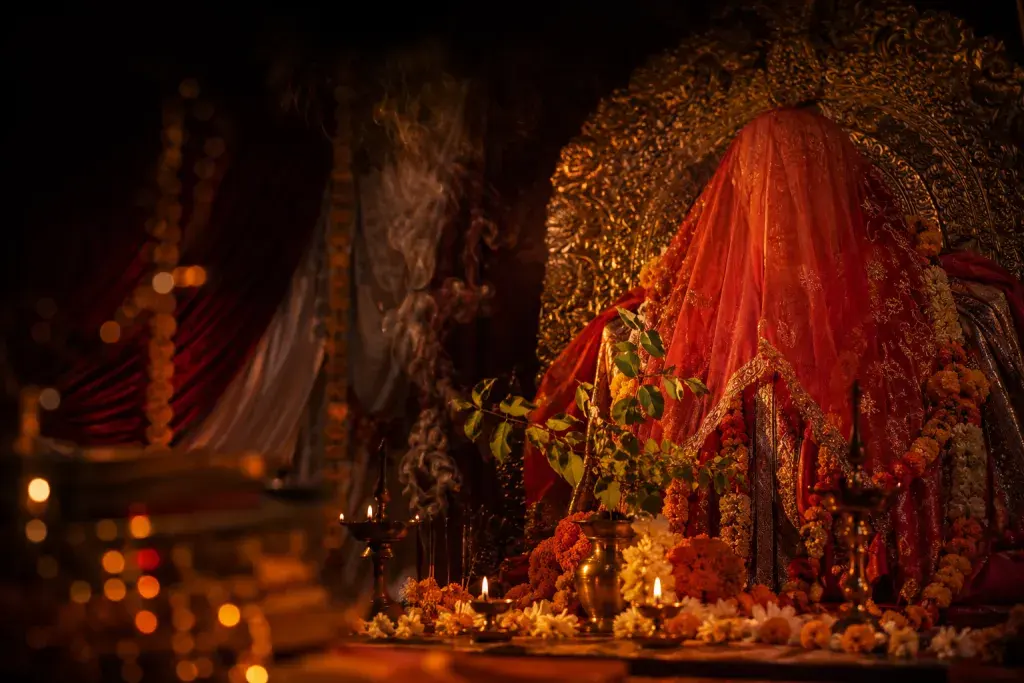
- Unveiling of the image: the face of the Durga idol, kept covered until now, is revealed to devotees, opening the pandals to the public.
- Lighting lamps and offering flowers, sweets and incense as the household and community greet the Goddess on her first day.
- Dressing in new clothes and visiting pandals in the evening, as the social and cultural side of Durga Puja begins.
Regional variations
How this date is determined
Observed on the Shashthi tithi of Ashwin (Shukla paksha), reckoned by sunrise (udaya tithi). Should the tithi fall across two days, tradition keeps the earlier day (purva-viddha).
Dates are computed to astronomical precision (NASA/JPL ephemeris), in line with traditional panchang.