Randhan Chhath
When it falls
The date shifts because it tracks the moon, not the Gregorian calendar.
Calculated for India (IST) using precise Panchang astronomy. Dates can shift by a day at locations far to the east or west.
What Randhan Chhath marks
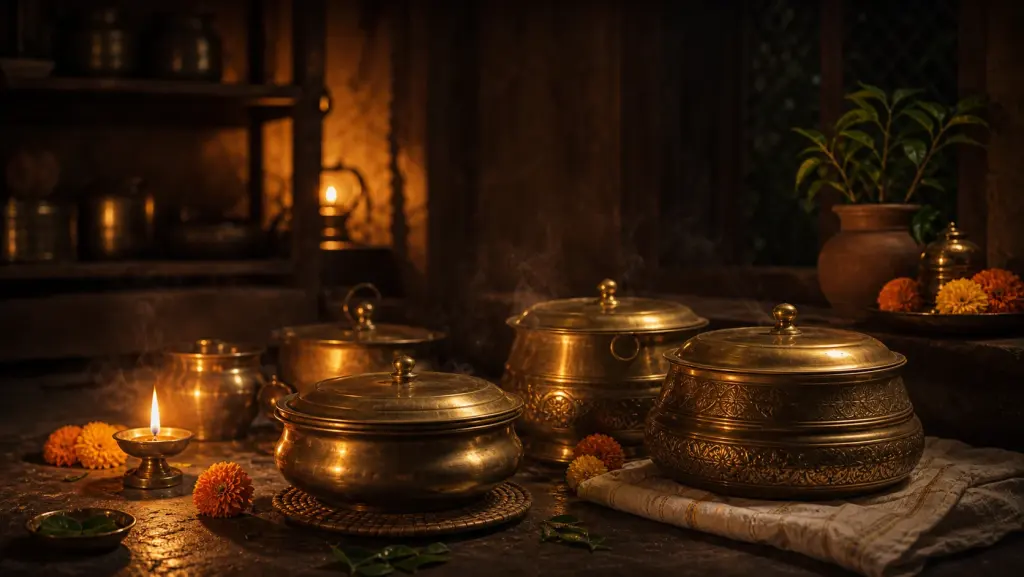
Randhan Chhath is observed mainly in Gujarat on the sixth day (chhath) of the dark fortnight (Krishna Paksha) of Shravan, the monsoon month. The name comes from randhan, meaning cooking, and that is exactly what the day is about: cooking everything the household will need so that the kitchen fire can be put to rest the following day.
The day exists because of the one that follows it. The next morning is Shitala Satam, dedicated to the goddess Shitala, when no fresh cooking is done and the hearth is left cold. Randhan Chhath is the practical preparation for that vow — the last day the stove is lit before its day of rest.
Underneath the routine is an old idea of giving the kitchen fire, and the woman who tends it, one settled day off. It also fits the season: in the heat and dampness of late monsoon, the custom of eating cooled, previously cooked food on Shitala Satam carries a folk logic of its own. The observance is regional and home-centred rather than a temple festival, so how strictly it is kept varies from family to family.
Rituals & observance
Randhan Chhath is kept at home, in the kitchen, and the work is concentrated into a single day. Common practices include:
- Cooking the full menu in advance — sweets, savouries, dal, sabzi and rice — enough to last through the next day, since the stove will not be lit on Shitala Satam.
- Preparing dishes that keep well overnight without spoiling, which shapes the typical Randhan Chhath spread of fried snacks and items meant to be eaten cold.
- Finishing all cooking before the day ends, after which the stove or chulha is cleaned.
- Worshipping the stove or hearth in the evening once the cooking is done, treating the kitchen fire itself as the focus of the day.
- Setting aside the prepared food carefully so that on Shitala Satam the family eats only this day-old, room-temperature meal.
Regional variations
How this date is determined
Observed on the Shashthi tithi of Bhadrapada (Krishna paksha), reckoned by dusk (pradosh kala). Should the tithi fall across two days, tradition keeps the day with the greater overlap (adhika-vyapti).
Dates are computed to astronomical precision (NASA/JPL ephemeris), in line with traditional panchang.