Sant Tukaram Beej
Sant Tukaram
When it falls
The date shifts because it tracks the moon, not the Gregorian calendar.
Calculated for India (IST) using precise Panchang astronomy. Dates can shift by a day at locations far to the east or west.
Significance & story
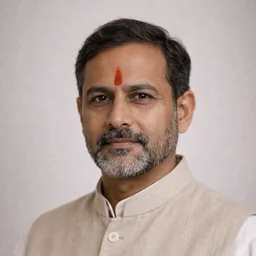
Sant Tukaram Beej commemorates the departure of Sant Tukaram, known as Tukaram Maharaj and fondly as Tukoba, one of the most beloved saint-poets of the Varkari tradition of Maharashtra. He lived in the seventeenth century at Dehu, a town near Pune on the banks of the Indrayani, and was a supreme devotee of Vitthal, the form of Vishnu worshipped at Pandharpur. His verses sing of longing for the divine in plain, direct language, and they remain close to the heart of ordinary people.
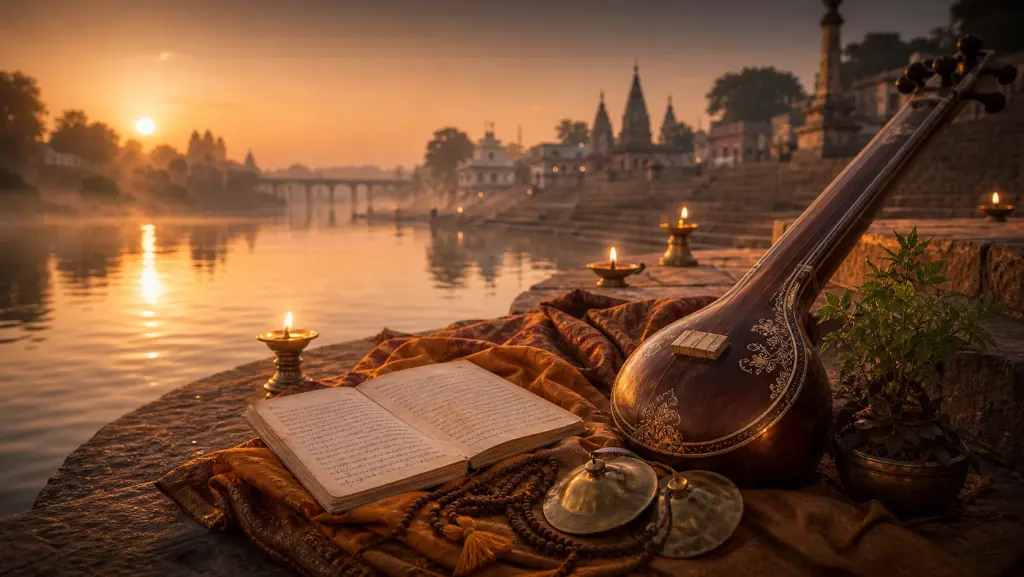
His abhangs, the short devotional verses for which he is best known, are a cornerstone of the Varkari tradition and are sung wherever its followers gather. They speak of devotion, humility, and the struggles of an ordinary life turned toward God, and their plainspoken honesty is much of why they are so loved. Through them, Tukaram gave the tradition a voice that anyone could carry, and the singing of his abhangs is still the living heart of Varkari devotion.
By long tradition, Tukaram is said to have ascended to Vaikuntha, the abode of Vishnu, in his own body, an event remembered as the sadeha Vaikuntha-gaman. This day, the Beej (Dwitiya tithi) of the waning fortnight of Chaitra, marks that departure, which is why it carries his name. The remembrance is centred at Dehu, the place held as his Vaikuntha-sthan, and is kept across Maharashtra wherever the Varkari devotion lives.
Rituals & observance
The day is kept in remembrance, with the singing of the saint's verses at its heart. Common practices include:
- Kirtan and abhang singing: devotees gather for kirtan (devotional storytelling in song) and the singing of Tukaram's abhangs, which carry the spirit of the day.
- Remembrance at dawn: in many places the day is marked at dawn, the hour associated with the saint's ascension, with prayer and song.
- Procession: a procession is taken in the saint's honour, accompanied by the playing of cymbals and the mridang and the chanting of Vitthal's name.
- Devotion to Vitthal: since Tukaram's life was given to Vitthal of Pandharpur, the day's worship turns toward that form, with the repetition of his name.
- Gathering at Dehu: devotees come to Dehu, the town on the Indrayani held as his Vaikuntha-sthan, to mark the day at the place associated with his departure.
- Reading and reflection: the abhangs and the stories of the saint's life are read and reflected upon, in keeping with the day's spirit of remembrance.
Regional variations
How this date is determined
Observed on the Dwitiya tithi of Chaitra (Krishna paksha), reckoned by sunrise (udaya tithi).
Dates are computed to astronomical precision (NASA/JPL ephemeris), in line with traditional panchang.