Ratha Saptami
Surya (Sun God)
When it falls
The date shifts because it tracks the moon, not the Gregorian calendar.
Calculated for India (IST) using precise Panchang astronomy. Dates can shift by a day at locations far to the east or west.
Why Ratha Saptami matters
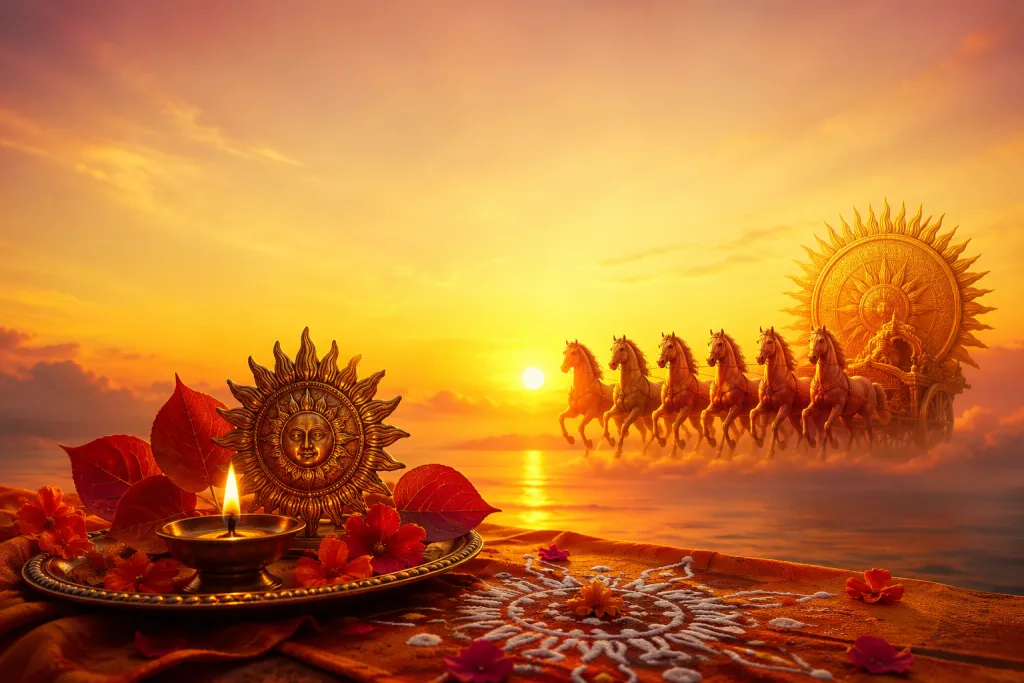
Ratha Saptami falls on the seventh day (Saptami) of the bright fortnight (Shukla Paksha) of the lunar month of Magha. The name means "chariot seventh": ratha is the Sun god Surya's chariot, drawn by seven horses and guided by Aruna, the charioteer of dawn. On this day the Sun is understood to turn his chariot toward the north, a turning that gradually lengthens the days and brings back warmth after winter.
Because of this turning, the day is often called the Sun's day of renewal — sometimes spoken of as Surya's symbolic birthday or Surya Jayanti. The seven horses are read as the seven days of the week or the colours of sunlight, and the single wheel as the year's cycle. The mood of the festival is one of gratitude: thanks for the light, warmth, and harvests the Sun makes possible.
Ratha Saptami sits within the wider Magha-month observances and is treated as an especially auspicious day for charitable giving, bathing in sacred rivers, and beginning new undertakings. It is widely kept across India, with particular devotion at Sun temples and in Vaishnava traditions, though the central act everywhere stays the same: a simple, sincere acknowledgement of the Sun.
Rituals & observance
Observance is deliberately simple and centred on the sunrise. The heart of the day is a pre-dawn bath followed by an offering of water and light to the Sun. Common customs include:
- Rise before sunrise and take a bath, ideally in a river or tank; many place a few ekka (calotropis) leaves on the head and shoulders during the bath as a traditional gesture of the day.
- Offer arghya — water poured from cupped hands toward the rising Sun — while facing east, often with a short prayer or the Gayatri or Surya mantras.
- Light a lamp and offer flowers, especially red ones, along with simple foods; in many homes a small Sun design or rangoli is drawn and a lamp placed at its centre.
- Recite or listen to hymns to Surya, such as the Aditya Hridayam, and spend the morning in quiet worship rather than elaborate ceremony.
- Give in charity — food, grain, or clothing to those in need — as the day is considered well suited to daana (giving).
- At Sun temples, join the special worship; the most famous gathering is at Tirumala, where the deity is taken out in procession on different vahanas (mounts) through the day.
Regional variations
How this date is determined
Observed on the Saptami tithi of Magha (Shukla paksha), reckoned by sunrise (udaya tithi). Should the tithi fall across two days, tradition keeps the earlier day (purva-viddha).
Dates are computed to astronomical precision (NASA/JPL ephemeris), in line with traditional panchang.