Nirjala Ekadashi
Lord Vishnu
When it falls
The date shifts because it tracks the moon, not the Gregorian calendar.
Calculated for India (IST) using precise Panchang astronomy. Dates can shift by a day at locations far to the east or west.
What Nirjala Ekadashi marks
Ekadashi — the eleventh lunar day — recurs twice each lunar month, once in the waxing fortnight and once in the waning one, and each is traditionally kept as a fast (vrat) dedicated to Vishnu. Nirjala Ekadashi is the one that falls in the waxing fortnight of the month of Jyeshtha (roughly May–June), and it is regarded as the most demanding of them all.
Its name says how it is kept: nirjala means "without water." Where most Ekadashi fasts allow fruit, milk, or water, this one is observed completely dry, from sunrise on Ekadashi until the fast is broken the next morning. The tradition holds that keeping this single waterless fast with sincerity carries the merit of observing all the year's Ekadashis — which is why many who cannot fast on every Ekadashi observe at least this one.
In many regions it is also called Bhimseni or Pandava Ekadashi, after a well-known story in which Bhima, unable to manage the frequent Ekadashi fasts, was counselled by the sage Vyasa to keep this one rigorous fast in place of all the others. The emphasis throughout is devotion to Vishnu and disciplined restraint rather than elaborate ritual.
Rituals & observance
The vrat is built around restraint and remembrance of Vishnu rather than display. Observance varies by family and region; keep to what your health and tradition allow.
- Begin the fast at sunrise on Ekadashi (14 June 2027) and keep it nirjala — without food and without water — through the day and night, until the parana the next morning.
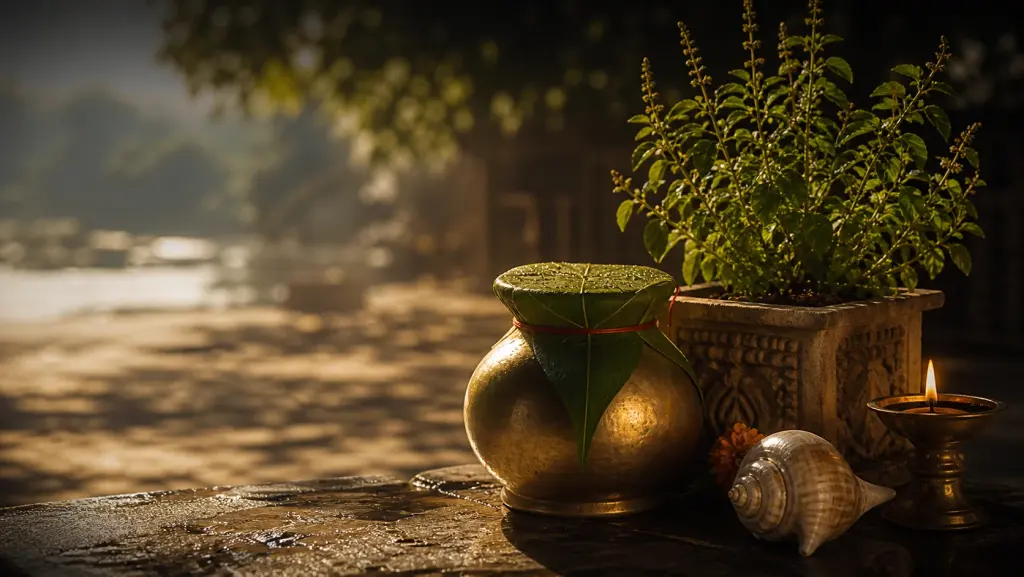
- Bathe and offer worship to Vishnu, often with tulsi (holy basil) leaves, and spend the day in prayer, reading, or remembrance of his name.
- Avoid grains and beans entirely, the standard restriction on every Ekadashi, along with the food and water that this particular vrat sets aside.
- Keep the day simple and disciplined — many devotees stay awake, recite or listen to Vishnu's stories, and limit ordinary activity and indulgence.
- Giving food, water vessels, or other charity (dana) to those in need is a customary part of the day, in keeping with its theme of restraint and generosity.
- Break the fast the next morning during the parana window, after the Ekadashi tithi has ended — traditionally with water first, then food.
How this date is determined
Observed on the Ekadashi tithi of Jyeshtha (Shukla paksha), reckoned by sunrise (udaya tithi).
Dates are computed to astronomical precision (NASA/JPL ephemeris), in line with traditional panchang.