Narali Pournima
When it falls
The date shifts because it tracks the moon, not the Gregorian calendar.
Calculated for India (IST) using precise Panchang astronomy. Dates can shift by a day at locations far to the east or west.
What Narali Pournima means on the Maharashtra coast
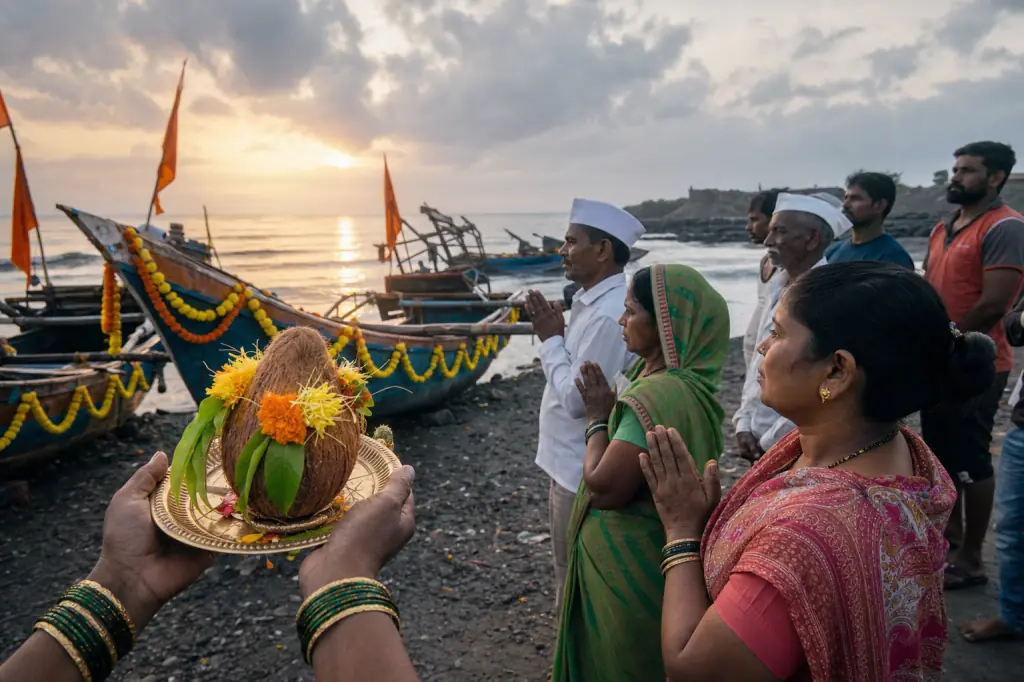
Narali Pournima is the Shravan full-moon observance of Maharashtra's coast. Its name comes from naral, coconut: fishing communities ceremonially offer a coconut to the sea and pray for safety, favourable conditions, and livelihood as activity resumes after the rough monsoon period.
The sea is approached with respect rather than treated only as a resource. Koli communities decorate boats, gather at the shore, sing and pray, and share coconut-based food. The coconut offering is symbolic; public celebrations should still follow local safety, weather, and coastal-authority guidance.
Shravan Purnima also carries Raksha Bandhan and Upakarma traditions, but the page does not collapse them into one observance. ModernAstro computes Narali Pournima by its Maharashtra aparahna convention; in years when Purnima begins after sunrise, its coastal observance can fall on the civil day before an udaya-based Raksha Bandhan listing.
Rituals & observance
Narali Pournima is a community and livelihood observance as well as a puja. The sea condition and local coastal rules always outrank a ceremonial timetable.
- Preparing the coconut offering: a coconut is cleaned and decorated for the sea prayer according to family or community custom.
- Gathering at the coast or community shrine: fishing families assemble for prayer, song, and remembrance of the sea's importance to their work.
- Offering to the sea: the coconut is ceremonially offered from a safe place and in the locally accepted manner, without entering dangerous water.
- Decorating boats and equipment: boats may be cleaned, painted, garlanded, or blessed before the next phase of fishing activity.
- Sharing coconut food: narali bhaat, coconut sweets, and other regional dishes are prepared and shared after the observance.
Regional variations
How this date is determined
Observed on the full-moon day (Purnima) of Shravana (Shukla paksha), reckoned by the afternoon (aparahna). Should the tithi fall across two days, tradition keeps the day with the greater overlap (adhika-vyapti).
Dates are computed to astronomical precision (NASA/JPL ephemeris), in line with traditional panchang.