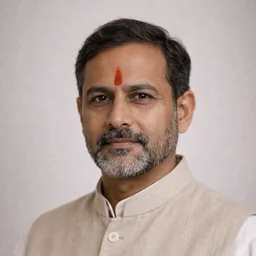
Narada Jayanti
Narada Muni
When it falls
The date shifts because it tracks the moon, not the Gregorian calendar.
Calculated for India (IST) using precise Panchang astronomy. Dates can shift by a day at locations far to the east or west.
Who Narada is and why the day is observed
Narada Jayanti honours Devarshi Narada, one of the most familiar figures in the Puranas. He is described as a mind-born son of Brahma and a wandering sage (rishi) who moves freely between the worlds of the gods, the sages, and human beings. He carries a stringed instrument called the veena, chants the name of Narayana (Vishnu) constantly, and is counted among the great devotees of Vishnu. Because he travels everywhere and speaks plainly, he is remembered as a messenger who carries news, advice, and sometimes a sharp question from one party to another.
In many stories Narada appears just before a turning point. He nudges events along, asks the question no one else will ask, and often sets right what is going wrong, even when his role looks like mischief at first. The tradition treats this not as trouble-making but as the work of someone who keeps devotion and dharma in motion. He is also linked to the path of bhakti (loving devotion); the Narada Bhakti Sutras, a short text on devotion, is attributed to him, and he is regarded as a teacher who pointed several well-known devotees toward Vishnu.
The day falls on Krishna Pratipada in the month of Jyeshtha, the first day of the waning fortnight that follows Jyeshtha Purnima, usually in late May or June. Compared with the larger festivals it is a quieter, more devotional observance, kept especially by Vaishnavas, musicians, and those drawn to the path of bhakti. For many it is also a day to honour communication used well, since Narada stands for carrying the right word to the right person at the right time.
Rituals & observance
Observance is simple and devotional rather than elaborate, centred on Vishnu worship, scripture, and music. Common practices include:
- Worshipping Lord Vishnu (Narayana) and chanting his names, since Narada is remembered above all as Vishnu's devotee.
- Reading or listening to passages associated with Narada, such as the Narada Bhakti Sutras or stories of him from the Puranas like the Bhagavata.
- Singing bhajans and kirtan, often with the veena or other instruments, in keeping with Narada's place as a sage of devotional music.
- Keeping a simple fast (vrat) for the day, with many devotees taking only fruit and milk and eating after evening worship.
- Visiting a Vishnu temple for darshan and offering flowers, tulsi leaves, and simple prasad.
- Spending the day in good company and honest speech, reflecting Narada's role as a carrier of truthful words between people.
How this date is determined
Observed on the Pratipada tithi of Jyeshtha (Krishna paksha), reckoned by sunrise (udaya tithi).
Dates are computed to astronomical precision (NASA/JPL ephemeris), in line with traditional panchang.