Kamada Ekadashi
Lord Vishnu
When it falls
The date shifts because it tracks the moon, not the Gregorian calendar.
Calculated for India (IST) using precise Panchang astronomy. Dates can shift by a day at locations far to the east or west.
What Kamada Ekadashi marks
Kamada Ekadashi falls on the eleventh lunar day (ekadashi) of the waxing fortnight of Chaitra, the first month of the Hindu lunar calendar. Because it is the first Ekadashi after the New Year, it is treated as an auspicious opening to the year's cycle of Vishnu fasts.
The name comes from kama, meaning desire or longing. In the traditional account told in the Varaha Purana, the fast is described as one that relieves the burden of past faults and helps fulfil sincere, righteous wishes — its merit is the reason it is called kamada, "the granter of desires." As with every Ekadashi, the underlying practice is the same: a day set aside from ordinary indulgence and turned toward Vishnu.
Ekadashi recurs twice each lunar month — once in the bright fortnight and once in the dark — so Kamada is one specific named occasion within a year-round rhythm. Each Ekadashi carries its own story and name, but all share the core observance of fasting and devotion to Vishnu.
Rituals & observance
The observance is simple and centres on restraint and worship. Devotees keep the fast from sunrise on Ekadashi until the parana window the next morning; the strictness varies by family and capacity.
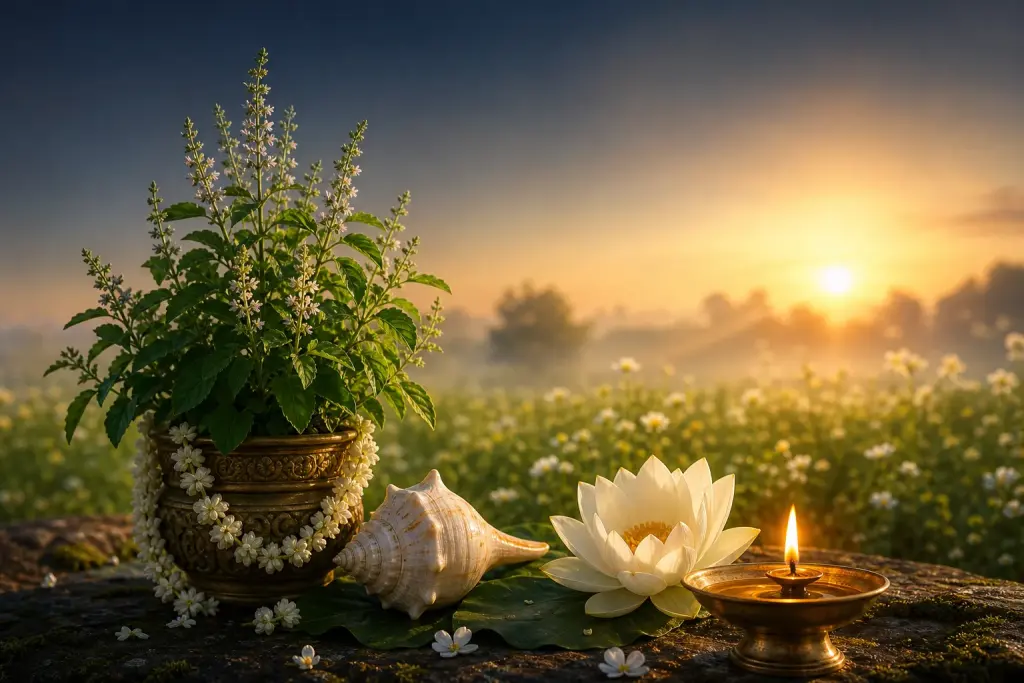
- Bathe and begin the day with a vow (sankalpa) to keep the fast, then offer worship to Vishnu — commonly with tulsi leaves, flowers, incense and a lamp.
- Avoid grains, rice, beans and lentils for the day. A strict fast (nirjala) takes nothing at all; a partial fast allows fruit, milk and water, while many keep a single meal of permitted (phalahar) foods.
- Spend the day in remembrance — reading or hearing the Kamada Ekadashi story, chanting Vishnu's names, or quiet prayer rather than feasting and distraction.
- Some keep a night vigil (jagran) near the close of Ekadashi, staying awake in devotion.
- Break the fast the next morning during the parana window, after the Ekadashi tithi has ended and within the prescribed time — ideally before the Dwadashi tithi passes. The day's parana timing is given in the panchang.
How this date is determined
Observed on the Ekadashi tithi of Chaitra (Shukla paksha), reckoned by sunrise (udaya tithi).
Dates are computed to astronomical precision (NASA/JPL ephemeris), in line with traditional panchang.