Hanuman Jayanti
Lord Hanuman
When it falls
The date shifts because it tracks the moon, not the Gregorian calendar.
Calculated for India (IST) using precise Panchang astronomy. Dates can shift by a day at locations far to the east or west.
Why Hanuman Jayanti is observed
Hanuman Jayanti celebrates the birth of Lord Hanuman, the vanara (monkey) deity best known for his devotion to Lord Rama. In the Ramayana he leaps across the sea to Lanka, finds Sita in captivity, carries Rama's message, and brings the Sanjivani herb to revive the wounded Lakshmana. For most devotees he stands for three things together: physical strength, courage, and loyalty to a higher purpose.
The day falls on the full moon (purnima) of the lunar month Chaitra, which usually lands in March or April. Hanuman is regarded as a present and approachable helper rather than a distant figure, which is why his worship is associated with protection and steadiness during difficult times. The emphasis is less on grand mythology and more on the example he sets: serving without ego and acting with discipline when it matters.
In popular tradition Hanuman is linked to the planet Mars (Mangal), and Tuesdays and Saturdays are commonly set aside for his worship through the week. On Hanuman Jayanti this regular devotion is heightened, with temples drawing large crowds and many households keeping a fast and reciting his praises from dawn.
Rituals & observance
Observance centres on recitation, fasting, and temple worship from early morning. Common practices include:
- Reciting the Hanuman Chalisa, often forty times or more through the day, alone or in group chanting at temples.
- Reading or listening to the Sundarkand, the section of the Ramayana that recounts Hanuman's search for Sita in Lanka.
- Visiting a Hanuman temple at dawn for darshan and the morning aarti, when crowds and queues are at their largest.
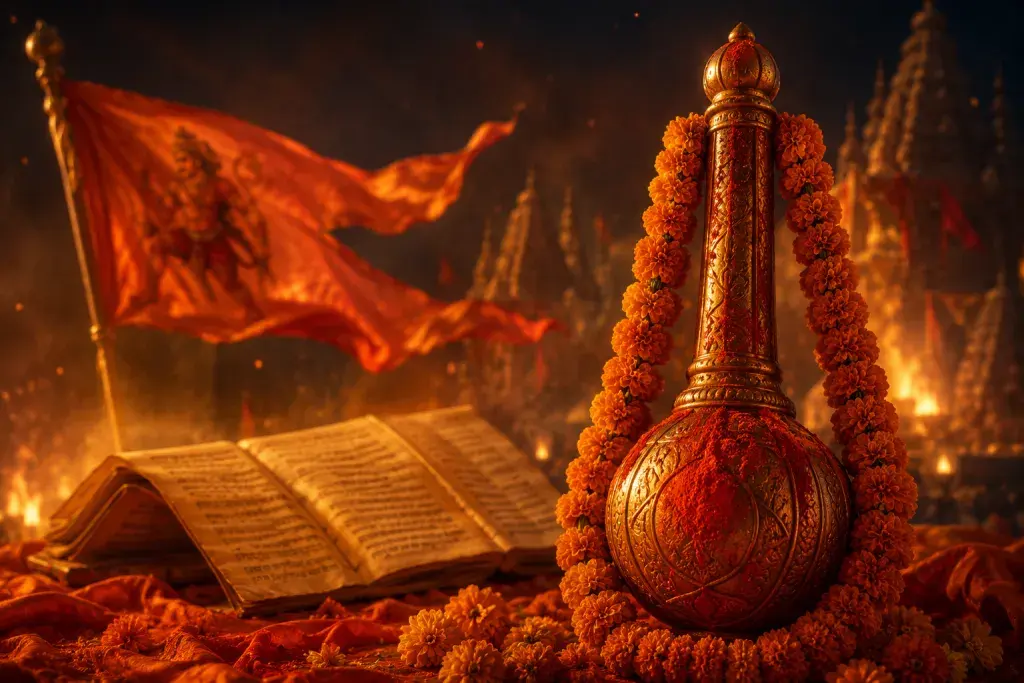
- Offering vermilion (sindoor) and oil along with flower garlands; sindoor is offered in keeping with the tradition that Hanuman applied it across his body out of devotion to Rama.
- Keeping a fast (vrat) for the day, with many devotees taking only fruit and milk and breaking the fast after evening worship.
- Offering simple prasad such as boondi laddoo, bananas, or jaggery, which is later shared among family and visitors.
Regional variations
How this date is determined
Observed on the full-moon day (Purnima) of Chaitra (Shukla paksha), reckoned by sunrise (udaya tithi).
Dates are computed to astronomical precision (NASA/JPL ephemeris), in line with traditional panchang.