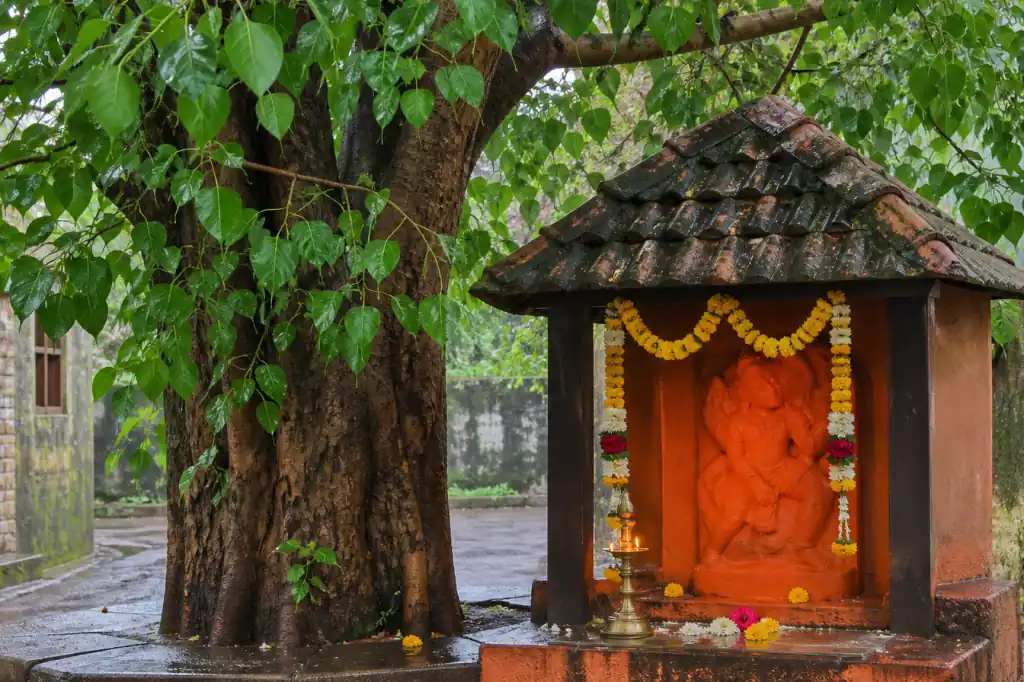
Ashwattha Maruti Pujan
Maruti (Hanuman)
Dates in 2027
A monthly observance — here are its dates through this year.
Calculated for India (IST) using precise Panchang astronomy. Dates can shift by a day at locations far to the east or west.
Why Ashwattha and Maruti are worshipped on Shravan Saturdays
Saturday in Maharashtra's Shravan tradition brings together worship of the Ashwattha (peepal) tree and Maruti (Hanuman). Older regional accounts also mention Shani and, in some local forms, Narasimha. The observance reflects the month's wider pattern of giving every weekday a devotional focus.
The peepal is treated as a sacred living tree, while Maruti is honoured for strength, disciplined service, and devotion. The puja therefore combines reverence at a tree or tree-shrine with prayer at a Maruti temple or household image. It should not be reduced to an astrology remedy promising that all difficulty will disappear.
The observance recurs on Saturdays within Maharashtra's Amanta Shravan. City temples, village tree-shrines, and home practices do not all use the same sequence, so local rules matter—especially for lighting lamps, touching the shrine, and making circumambulations around a living tree.
Rituals & observance
Ashwattha Maruti Pujan may be performed at a peepal tree, a Maruti shrine, or both. Treat the tree carefully and follow the site's established worship rules.
- Visiting the Ashwattha or Maruti shrine: devotees clean the immediate worship area without damaging the tree or disturbing temple arrangements.
- Offering lamp and flowers: a lamp, flowers, and customary offerings are placed only where the temple or local practice permits.
- Maruti prayer: Hanuman's names, a familiar stotra, or Hanuman Chalisa may be recited according to the devotee's tradition.
- Respectful pradakshina: some devotees circumambulate the peepal tree or shrine; the number and manner are family customs, not a universal rule.
- Saturday restraint or vrat: food discipline, charity, or a simple fast may accompany the puja, but health and established household practice decide the form.
Regional variations
How this date is determined
Set by the lunar calendar, reckoned by sunrise (udaya tithi).
Dates are computed to astronomical precision (NASA/JPL ephemeris), in line with traditional panchang.